
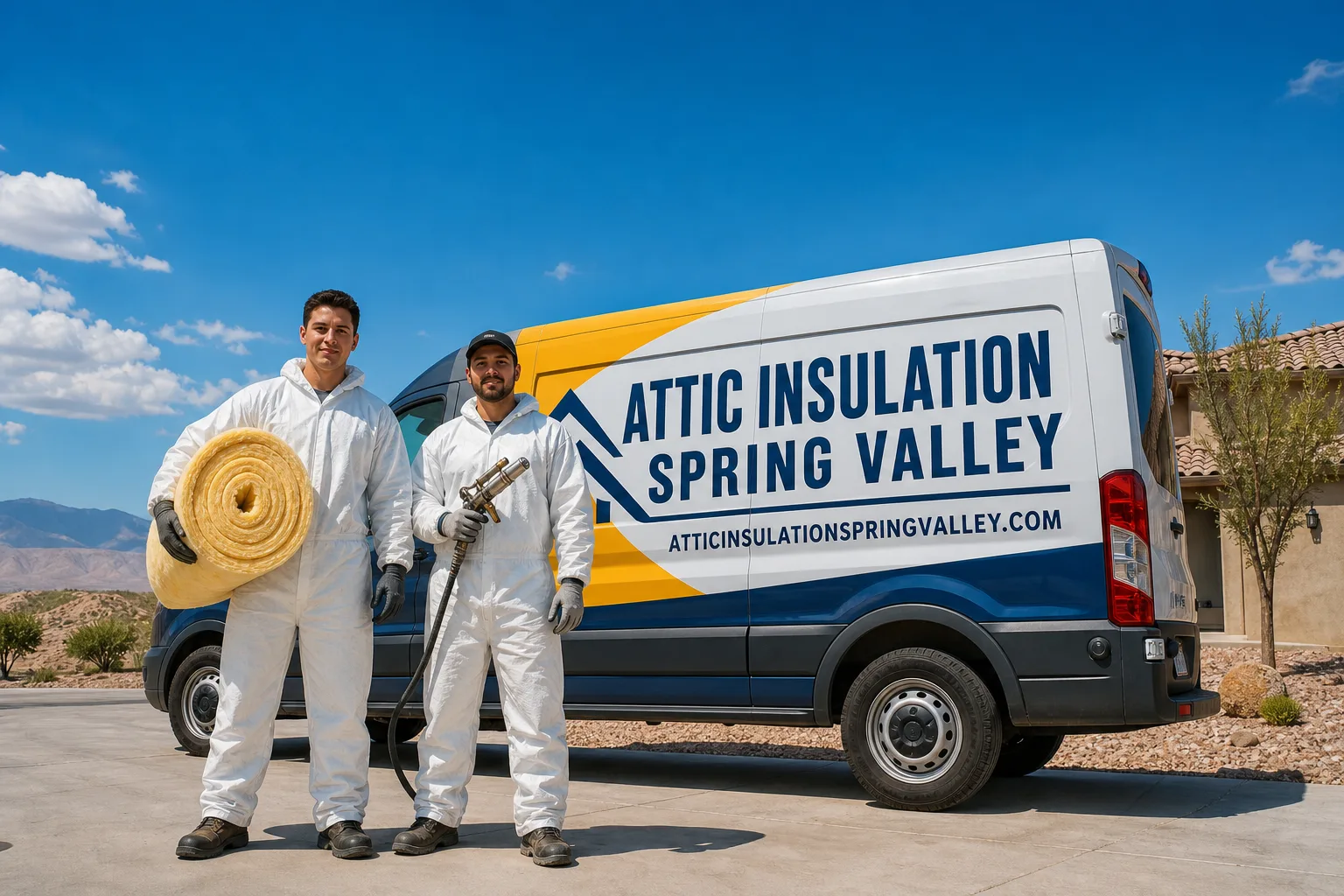
Trusted Attic Insulation for Spring Valley Homeowners
If your upstairs rooms run hot while the downstairs stays comfortable, or your summer power bill climbs every year without an obvious reason, the attic is usually where the answer sits. Spring Valley sits in a desert valley where attic temperatures push past 140°F on a July afternoon, and a thin or settled layer of insulation lets that heat pour straight down through your ceiling. We install attic insulation built for this climate, not for a milder one. Our technicians have up to 8 years of experience and work exclusively in attics. We’re licensed and insured, estimates are free, and every quote is written. Call (833) 588-6196 to get yours started.
Insulation Contractors
Insulation Contractors in Spring Valley deal with a very specific set of problems: attics baked by desert sun, blown-in material that has settled far below its original depth, and ductwork running through spaces that reach oven temperatures. You need one when the home is uncomfortable room by room, when energy costs keep climbing, or when you’re buying a house and want to know what shape the attic is really in. We match the material to your home, not the other way around. Typical attic insulation in Spring Valley runs $1,500 – $4,500, and the written estimate sets the final price once we’ve measured the space and seen what’s actually up there. Schedule a free look at Attic Insulation Spring Valley.
Material Selection by Home Type
Vaulted ceilings, low-slope roofs and additions with awkward framing all change which product makes sense. We work across fiberglass, mineral wool, spray foam and cellulose, so the house’s construction drives the choice rather than whatever happens to be on hand. CertainTeed and Knauf fiberglass handle standard open attics economically, while Icynene spray foam suits tricky transitions and knee walls.
Diagnosing the Real Problem
A cold room isn’t always an insulation problem. Sometimes it’s a duct leak, sometimes it’s air bypass around a can light, and sometimes it’s simply too little depth. Our estimate visit includes checking for all three, because adding material on top of an air leak wastes money. We tell you what we found before we talk about what it costs.
Attic Ventilation
Attic Ventilation balances the air flowing in at the eaves with the air leaving at the ridge or through static vents, and it matters here because trapped heat shortens the life of both your roof and your insulation. You need it addressed when the attic feels like a sauna, when shingles on one slope wear faster than the rest, or when moisture condenses on rafters and roof decking. We evaluate intake and exhaust together; adding exhaust without enough intake just pulls conditioned air out of the house. Ventilation corrections are usually folded into a broader attic insulation scope and priced inside that written estimate. Pair it with attic insulation for the biggest overall improvement.
Intake Versus Exhaust Balance
Many Spring Valley homes have plenty of roof vents and almost no soffit intake because the space was blocked during a previous reroof or by stored belongings. We check that balance first, since an attic that can’t pull air in won’t push air out no matter how many vents sit near the ridge.
Moisture and Condensation Control
Condensation on the underside of the roof deck is a sign of warm, moist air escaping into a cold space. Sealing air paths before adjusting ventilation keeps that moisture from causing bigger problems. It’s a sequencing question more than a product question, and we treat it that way.
Radiant Barrier
Radiant Barrier is a reflective sheet that reduces the amount of solar heat your roof deck radiates downward into the attic, and it performs best in hot, sunny climates like ours. It’s worth considering when the attic stays brutally hot even after insulation is brought up to depth, or when a section of the home has ductwork running through an unconditioned space. Typical radiant barrier installation in Spring Valley runs $1,000 – $3,000 depending on square footage and how the roof framing allows the product to be installed. It works best as a complement to proper insulation depth, not a substitute for it. Our estimate visit will tell you which one your attic actually needs. For nearby help, see our attic insulation page.
Where Reflective Sheeting Works Best
Attics with duct runs and no existing reflective layer see the most benefit. The product has to be installed facing an open air space to do its job, so we assess framing, clearances and access before recommending it.
Combining Barrier With Insulation
Reflective material stops radiant heat; insulation stops conductive and convective loss. Together they handle different parts of the same problem. We sequence the work so neither product interferes with the other’s performance.
Attic Cleaning Services
Attic Cleaning Services remove the dust, debris, rodent droppings and old loose material that collect in a space most homeowners never inspect. You need it when there’s a persistent musty smell in the upper rooms, when you’ve had a rodent or pest issue, or when insulation is coming out and the deck needs to be clean before anything new goes down. Our technicians use vacuums with HEPA filtration and bag the removed material for disposal rather than leaving dust suspended in the house. Cleaning is often bundled with insulation removal so the attic is ready for new material in one visit. Pricing falls within the removal and replacement range for the job. See what’s involved with attic insulation reviews for nearby homes.
Contaminant Removal and Disposal
Droppings and old material are bagged and hauled out, never blown around or left in the yard. We treat the removal as a containment job, because disturbing contaminated dust in a confined attic sends it through the house.
Pre-Installation Prep
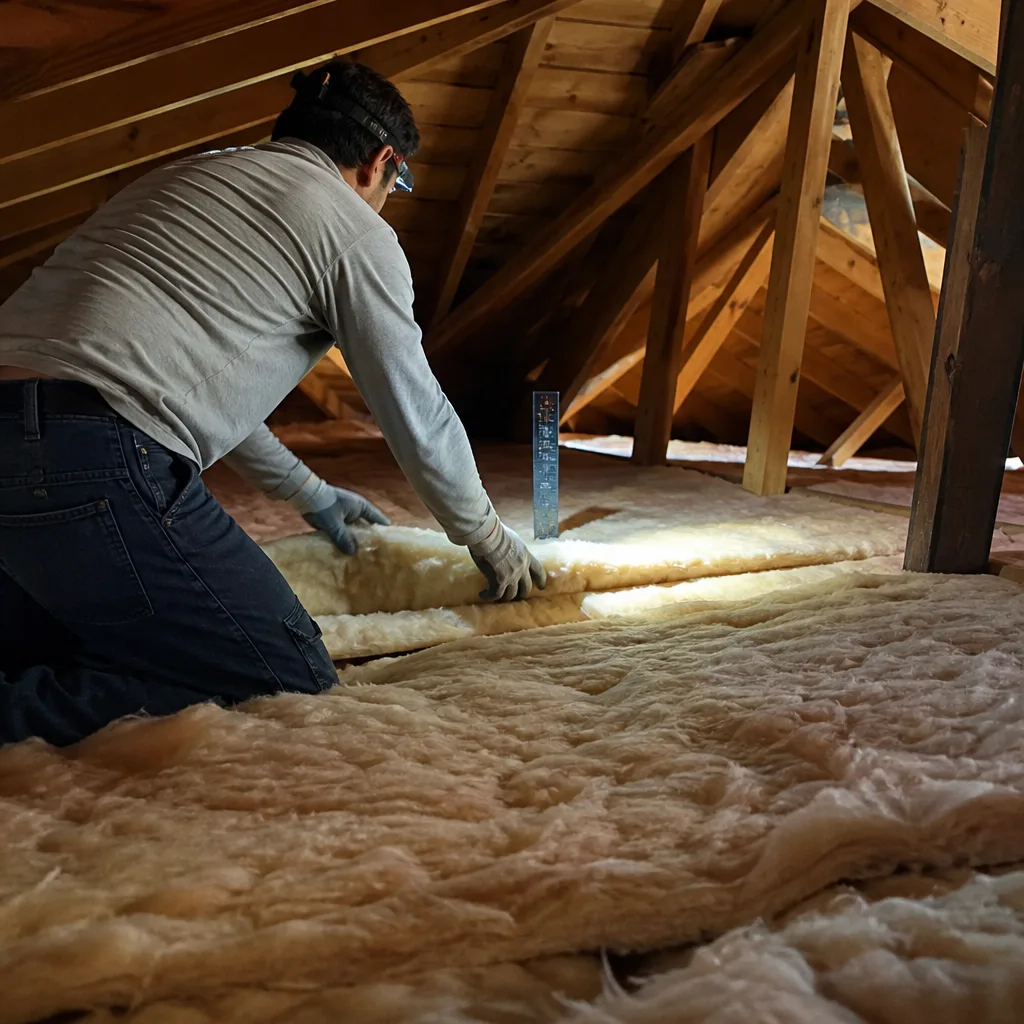
New insulation performs better on a clean deck with sealed penetrations. Cleaning before installation also lets us see the wiring, framing and roof deck condition we might otherwise miss. It’s a step worth taking seriously.
Attic Mold Removal
Attic Mold Removal addresses fungal growth that starts when warm, moist air meets a cool surface and stays there, a pattern that shows up most in attics with poor air sealing and unbalanced ventilation. You need to look at it when you see dark staining on the roof decking, when there’s a persistent musty odor upstairs, or when you have unexplained allergy symptoms that ease when you leave the house. We fix the moisture source first, because treating the surface without solving the underlying cause leads to a repeat. Our technicians wear respiratory protection and contain the work area during the job. Mold work typically falls inside the attic insulation removal and replacement range of $1,500 – $5,500 when new material is needed afterward. The written estimate sets the final price.
Finding the Moisture Source
Mold needs water. That water usually comes from air leaking up from the house, a bath or dryer vent discharging into the attic, or a roof leak. We trace the source before anything is treated, because the fix is different for each.
Surface Treatment and Rebuild
Affected areas are cleaned and treated, then the attic is air-sealed and ventilated correctly to keep the condition from returning. Insulation that was contaminated is removed and replaced. The scope is spelled out in writing before work begins.
Attic Insulation Removal
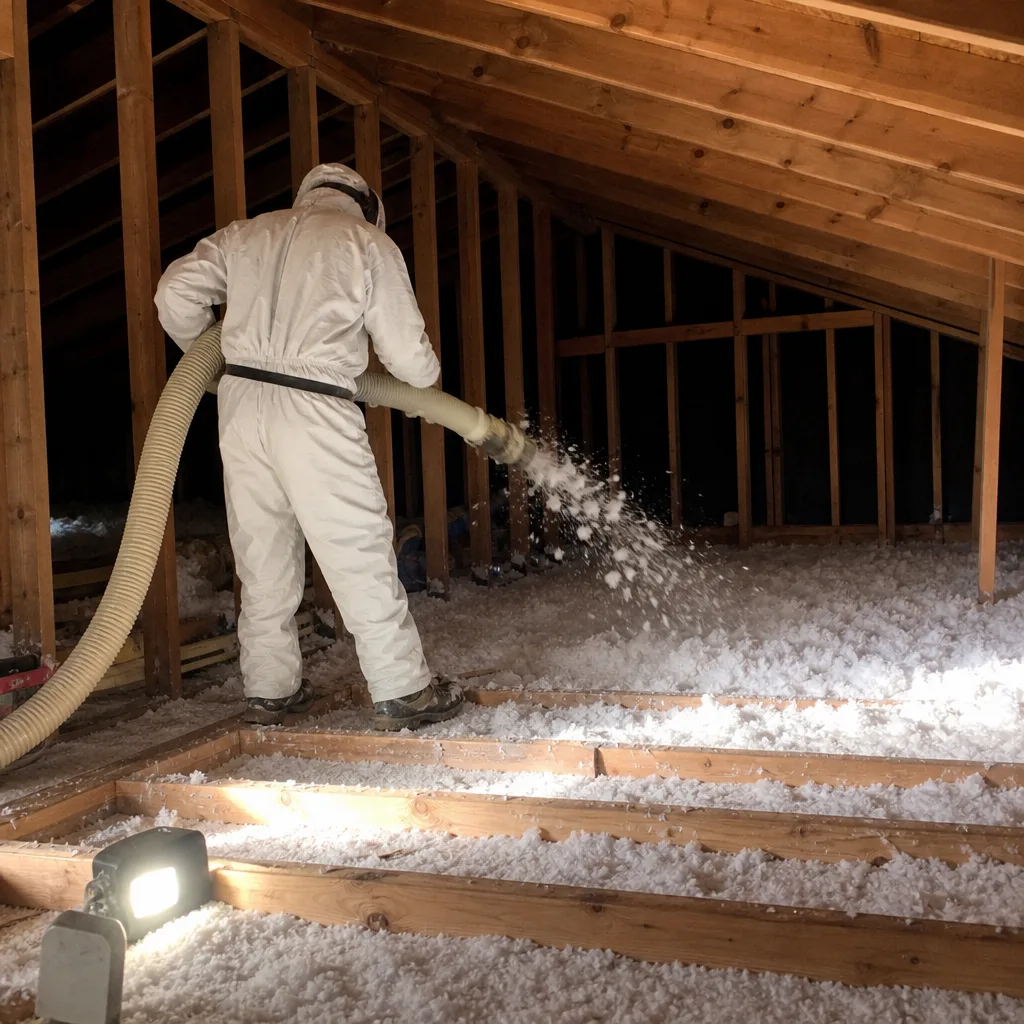
Attic Insulation Removal takes out old, contaminated, compacted or moisture-damaged material so the deck can be cleaned, air-sealed and insulated properly from scratch. You need it when the existing material is soaked, has been disturbed by pests, contains visible mold, or has settled into a mat that no longer holds any useful air pockets. Our technicians use industrial vacuums to pull the old material out through a hose rather than hauling bags down a ladder all day, which keeps dust contained and the work cleaner. Removal and replacement in Spring Valley typically runs $1,500 – $5,500 depending on attic size, material type and disposal volume. Ask about our attic insulation service if you’re comparing options across the valley.
When Removal Beats Topping Up
If the existing material is clean and simply thin, we usually add depth instead of removing it. Removal makes sense when the material is contaminated, wet or so compacted that adding more won’t help. We test and inspect before recommending either path.
Clean Deck Before New Installation
Once the old material is out, we can see framing, wiring and ductwork clearly and seal every penetration before the new product goes down. That step is where a lot of the real energy savings come from, and it’s impossible with old material still in place.
Brands We Service
We install Owens Corning fiberglass, both batts and blown-in, and know how it behaves when attic temperatures swing hard between day and night. Johns Manville blown-in fiberglass is a strong fit for standard open attics where cost matters without sacrificing coverage. CertainTeed products give us another reliable fiberglass option for homes with specific depth targets, and Knauf fiberglass rounds out the lineup where framing and access point toward batts.
For mineral wool, we work with Rockwool, whose fire resistance and moisture tolerance suit attics with irregular framing or hostile conditions. For spray foam, Icynene covers open-cell applications where air sealing and moisture management matter; Demilec handles closed-cell jobs that need a denser, more rigid result. GreenFiber recycled cellulose gives eco-minded homeowners a credible green option without a special order. Whether you have any of these or want to compare, we can help.
Signs You Need a Pro Right Now
Most attic insulation problems give you warnings before they cost you real money.
- Rooms that won’t cool in summer. The upstairs stays hot while the ground floor is fine, which usually means heat is moving through the ceiling faster than the system can remove it. That points to thin insulation or air leakage.
- Energy bills climbing year over year. A steady rise with no change in usage habits often means the attic has lost depth through settling. Blown-in material compacts over time and loses its effective coverage.
- Drafty rooms above the garage or near soffits. These spots are the first to show gaps because framing penetrations and exterior wall transitions aren’t sealed. Cold air finds those paths and follows them into the living space.
- Musty smell or visible staining on the roof deck. Both suggest moisture is trapped up there and mold may be developing. Treating the surface without finding the moisture source won’t hold.
- Old insulation that looks flat or dirty. Dirty, matted material is a sign that air is bypassing it or pests have been through. Neither improves on its own.
Our Process, Step by Step
- 1
Free estimate visit. We measure the attic, check depth and material type, look at ventilation balance, and inspect for moisture, pests or air bypasses. You get findings in plain English before any number is discussed.
- 2
Written scope and price. We put the recommended work in writing, name the products and list what’s included. No verbal ballpark, no surprises when the bill arrives.
- 3
Air sealing before insulation. Can lights, top plates, wiring and plumbing penetrations get sealed first. This single step often does as much for comfort as the insulation itself.
- 4
Installation with the right method. Batts, blown-in or spray foam, chosen to match framing, depth targets and moisture conditions. Vapor barriers go in where appropriate.
- 5
Final walkthrough. We review the depth achieved, show you what was done, and leave the attic clean. You’ll know exactly what was installed and why.
How Much Does Attic Insulation Cost in Spring Valley?
Attic insulation in Spring Valley typically runs $1,500 – $4,500 for a full installation, and the written estimate sets the final price once we’ve measured the space. A straightforward topping-up with blown-in fiberglass in an open attic tends to land on the lower end. Attics with awkward access, knee walls, existing material to remove or spray foam in the scope will move toward the upper end.
Here’s how the line items compare for Spring Valley homes:
| Service | Typical Estimated Range |
|---|---|
| Attic Insulation | $1,500 – $4,500 |
| Blown-In Insulation | $1,200 – $3,500 |
| Spray Foam Insulation | $2,500 – $8,000 |
| Insulation Removal & Replacement | $1,500 – $5,500 |
| Attic Air Sealing | $600 – $2,000 |
| Radiant Barrier Installation | $1,000 – $3,000 |
| Wall Insulation | $1,500 – $5,000 |
Several things affect where your job lands. Attic square footage is the biggest single factor. Access matters, too: a narrow scuttle in a closet takes longer to work through than a pull-down stair. Material choice shifts the number meaningfully, since spray foam costs more than fiberglass or cellulose. Removal and disposal of old material adds cost when the existing insulation is contaminated or compacted. Air sealing is sometimes folded into the insulation scope and sometimes quoted separately.
To avoid overpaying, insist on a written scope that names the material, the target depth and what’s included. And know what the free estimate covers: full attic measurement, inspection for moisture and pest damage, ventilation check, depth readings and a written price with no obligation. Call (833) 588-6196 to schedule yours.
Our Service Area Near Spring Valley
We serve homeowners throughout Spring Valley and the surrounding communities, including Summerlin, Enterprise, Paradise, Winchester, Las Vegas, Whitney, Sunrise Manor, Henderson, North Las Vegas, Boulder City and Sandy Valley. Estimates are scheduled promptly, and the work is booked around your timeline once the written scope is agreed. If you’re comparing options across the valley, our attic insulation page covers nearby homes.
Serving Spring Valley, NV – Our Local Coverage Area
We serve Spring Valley and nearby communities. Use the map below to see the area we cover. If you’re nearby, we can almost certainly help.
Frequently Asked Questions About Attic Insulation in Spring Valley
Attic insulation is material installed on the attic floor or roof deck that slows heat transfer between your living space and the outside. In a Spring Valley summer, it keeps the 140°F-plus attic heat from pushing down into your rooms. In winter, it holds warmth in. Common types include fiberglass batts, blown-in fiberglass and cellulose, mineral wool, and spray foam in both open-cell and closed-cell forms. The right choice depends on your framing and what’s already up there, not on what’s easiest to install.
Most residential attic insulation jobs are completed in a single visit. A straightforward blown-in installation in an open attic typically takes a few hours. Removal of old material or spray foam application adds time because of containment, cure and access. Your written estimate will state the expected duration before you commit. Call (833) 588-6196 to schedule your free estimate and get a timeline for your specific attic.
Typical attic insulation in Spring Valley runs $1,500 – $4,500, depending on attic size, access and material. Blown-in falls in the $1,200 – $3,500 range, spray foam in the $2,500 – $8,000 range, and removal and replacement in the $1,500 – $5,500 range. Every job is priced per job by the written estimate after a free inspection. Call (833) 588-6196 for an exact quote.
We install Rockwool and CertainTeed along with six other industry brands covering fiberglass, mineral wool, spray foam and cellulose. That range is the reason we can match the product to the home rather than fitting every attic to one material. Rockwool suits fire-resistance and moisture concerns; CertainTeed fiberglass works well in standard open attics. The free estimate will tell you which one your attic actually needs.
Same-day dispatch is available when the schedule allows, and we answer 24/7. Fast dispatch from 7am to 7pm, Sunday through Friday; we’re closed on Saturday. A call outside dispatch hours is booked into the next opening. Call (833) 588-6196 and we’ll schedule your free estimate into the earliest slot that fits.
Coverage depends on the product and manufacturer, and we tell you the warranty terms in writing as part of the estimate. Manufacturer warranties vary across Owens Corning, CertainTeed, Rockwool, Icynene and the others in our lineup. Our written scope names the product so you know exactly what coverage applies. Ask during your estimate and we’ll lay it out in plain terms.
Clear the attic access point and anything stored in the attic, since the technicians need a clear path in and out. Move valuables and cover nearby furniture if we’ll be working over living areas. Make sure someone is home to let the crew in and confirm the scope before work starts. Beyond that, we handle containment and cleanup. Call (833) 588-6196 to confirm your appointment and get the full prep list.
Schedule Your Attic Insulation Service in Spring Valley Today
Whether your attic is under-insulated, full of compacted old material or simply needs the right product chosen properly, we’ll give you a written scope and a price you can plan around. Estimates are free and there’s no obligation. Call (833) 588-6196 to get yours scheduled. We answer 24/7. Fast dispatch from 7am to 7pm, Sunday through Friday.
Written by the team at Attic Insulation Spring Valley.